


Cooking classes
Indian cooking in Pondicherry: spices, market, class
Indian cooking in Pondicherry: spices, the local market, South and North Indian dishes, and a hands-on Indian cooking class at Sita Cultural Center.

Indian food is loved all over the world for its flavours, its colours and its spices. But there is much more to it than curry and chilli. Indian cooking is a way of bringing together fresh ingredients, different tastes and knowledge that families have passed on for generations.
From simple lentil dishes to vegetable curries, crispy dosas and fragrant rice, Indian cuisine has something for everybody: vegetarians, vegans, and lovers of a good chicken or fish curry.
One of the best ways to understand it is to cook it yourself. This is what an Indian cooking class in Pondicherry looks like at Sita Cultural Center: the ingredients, the market, the spices, the dishes, and the meal you eat at the end.
Why Indian cooking tastes so special
The secret is balance. One dish can bring together sweet, sour, salty, bitter and pungent tastes. Each ingredient has a job: some add fragrance, some warmth, some colour, texture or a little acidity.
Take a simple vegetable curry. Fresh vegetables, turmeric, mustard seeds, ginger, garlic, curry leaves and a touch of tamarind already give several layers of flavour. Add freshly grated coconut and the same dish becomes something completely different.
Indian cooks learned over generations that the secret is not more spices, but knowing when and how to use them. And because every region has its own ingredients and traditions, Indian food never feels like a single cuisine. There is always something new to discover.
Spices and fresh ingredients
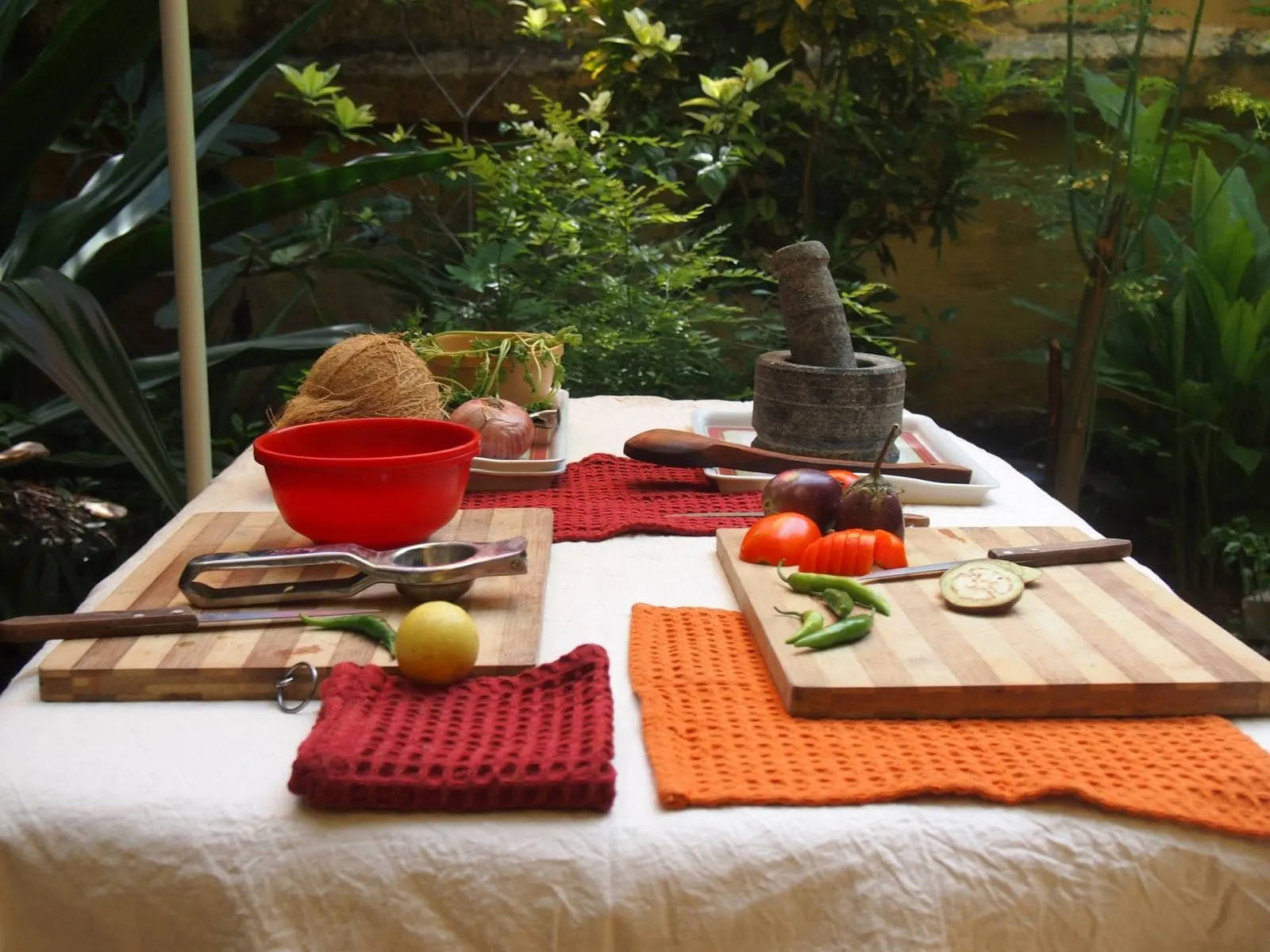
Walk through an Indian market and you understand at once how important ingredients are. Turmeric, cumin, coriander, black pepper, cardamom, cloves, cinnamon and dried chillies sit next to fresh ginger, garlic, green chillies, curry leaves, coconuts and seasonal vegetables.
None of them is there just to make food hot. Each one has its own character:
- Turmeric gives a warm, earthy flavour and a golden colour.
- Cumin adds a distinctive fragrance, and coriander a gentle, citrusy note.
- Black pepper brings warmth.
- Curry leaves have a fresh aroma that every South Indian kitchen knows.
- Fresh coconut is grated into vegetables, blended into chutneys and used to enrich curries.
- Tamarind gives a pleasant sourness.
- Mustard seeds, dropped into hot oil, release the aroma that starts many traditional dishes.
The beauty of Indian cooking is seeing how these everyday ingredients turn a simple meal into something special.
Vegetarian Indian cooking: much more than vegetables
Many visitors are surprised by how rich vegetarian food is in India. A vegetarian meal here is not a plate of vegetables without meat. It is a food tradition of its own, built on lentils, beans, grains, vegetables, herbs and spices.
Lentils, known as dal, are part of everyday meals. Chickpeas, kidney beans and green gram are widely used too, and they are a good source of plant protein and fibre. Paneer and yoghurt feature in many dishes, and plant-based alternatives work well for vegan versions.
Then come the vegetables: spinach, okra, aubergine, pumpkin, beans, gourds, carrots, cauliflower and seasonal greens. The same vegetable can taste completely different depending on the spices, the technique and the regional recipe. That is why you do not need meat to enjoy a colourful, satisfying Indian meal.
From the local market to your plate
Indian cooking begins long before the pot is on the fire. Choosing fresh produce, knowing the vegetables of the season and understanding which ingredients go together are all part of it.
In Pondicherry, the local markets are a wonderful introduction to everyday South Indian cooking: vegetables, fruit, herbs, coconuts and spices, with vendors calling out to catch your attention. It is very different from finding the same ingredients packed on a supermarket shelf. A vegetable you have never seen before might become the star of a traditional dish, and a handful of curry leaves or fresh coconut might be the secret behind its aroma.
This is why the class at Sita starts at the market. You go with your teacher by autorickshaw, who explains the spices and ingredients you may find exotic, and you buy the fresh produce for the class together.
North Indian and South Indian cooking
India is a big country, and its food changes with the region, the climate and the family.
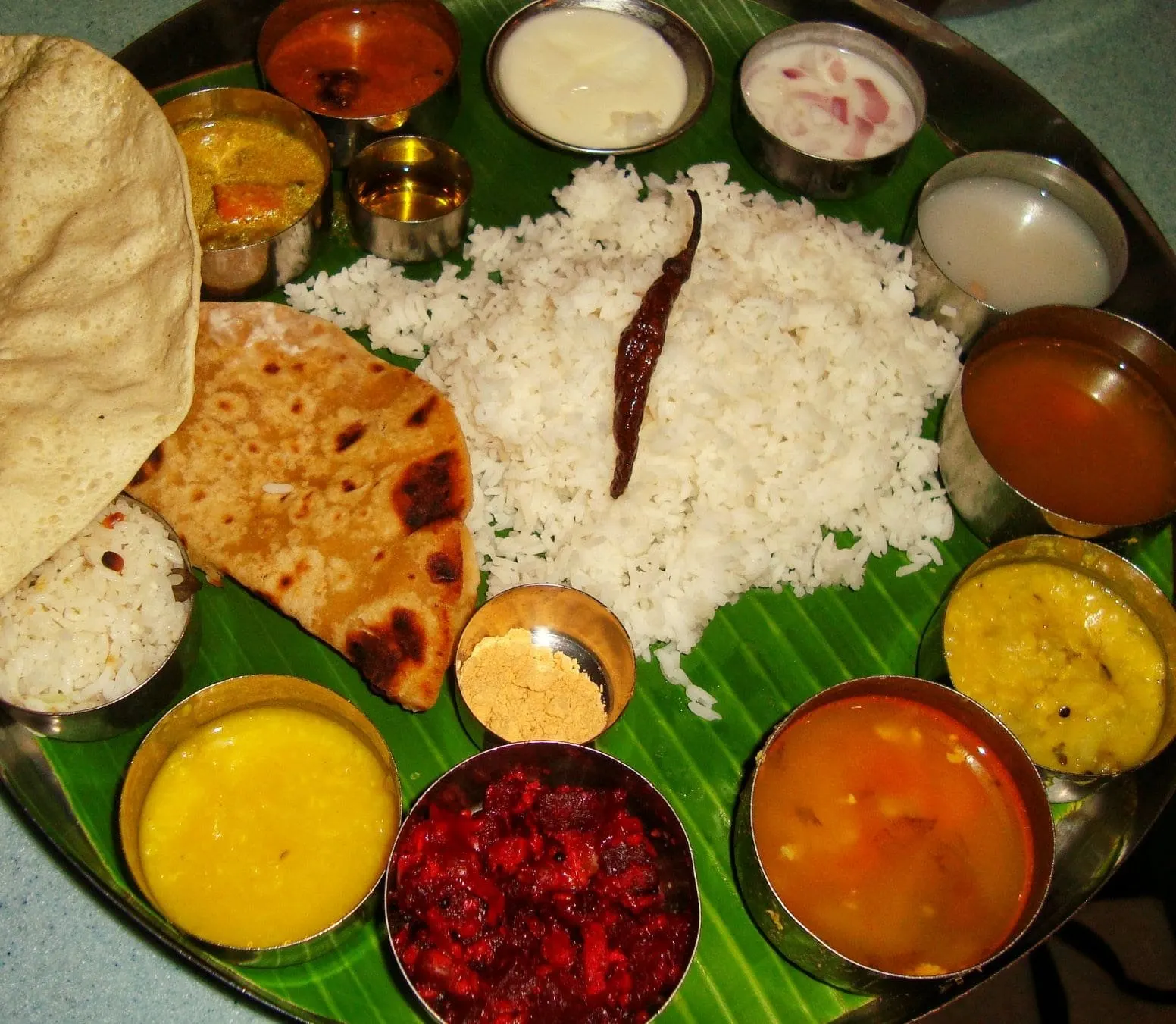
South Indian cooking, the food of Pondicherry and Tamil Nadu, is known for rice, lentils, coconut, tamarind, curry leaves and mustard seeds. Dosa, idli, sambar, rasam and coconut chutney are famous examples, often made with fermented batters, steaming and fragrant spice tempering.
North Indian cooking has its own character: breads such as roti and naan, lentil dishes, chickpeas, paneer, yoghurt-based curries and aromatic spice blends.
There is much more to both traditions than these well-known dishes. What they share is fresh ingredients, careful preparation and the skill of combining flavours.
What happens in the Indian cooking class at Sita
Reading about Indian food is interesting. Cooking it is better.
The class begins with the market visit. Back at Sita, your teacher shows you, step by step, how to cook the Indian way, and you are involved in every step: chopping vegetables, grating coconut, working with the spices, seasoning and cooking. Your teacher invites questions, so ask anything about ingredients, steps or variations.
You choose what to learn: vegetarian, vegan or non-vegetarian, South or North Indian. Some dishes our guests often cook:
- Meen kozhumbu, the fish curry typical of Pondicherry
- Sambar, the everyday lentil and vegetable gravy
- Palak paneer, for a taste of the north
- Chicken Chettinad
- Carrot halwa, for the sweet tooth
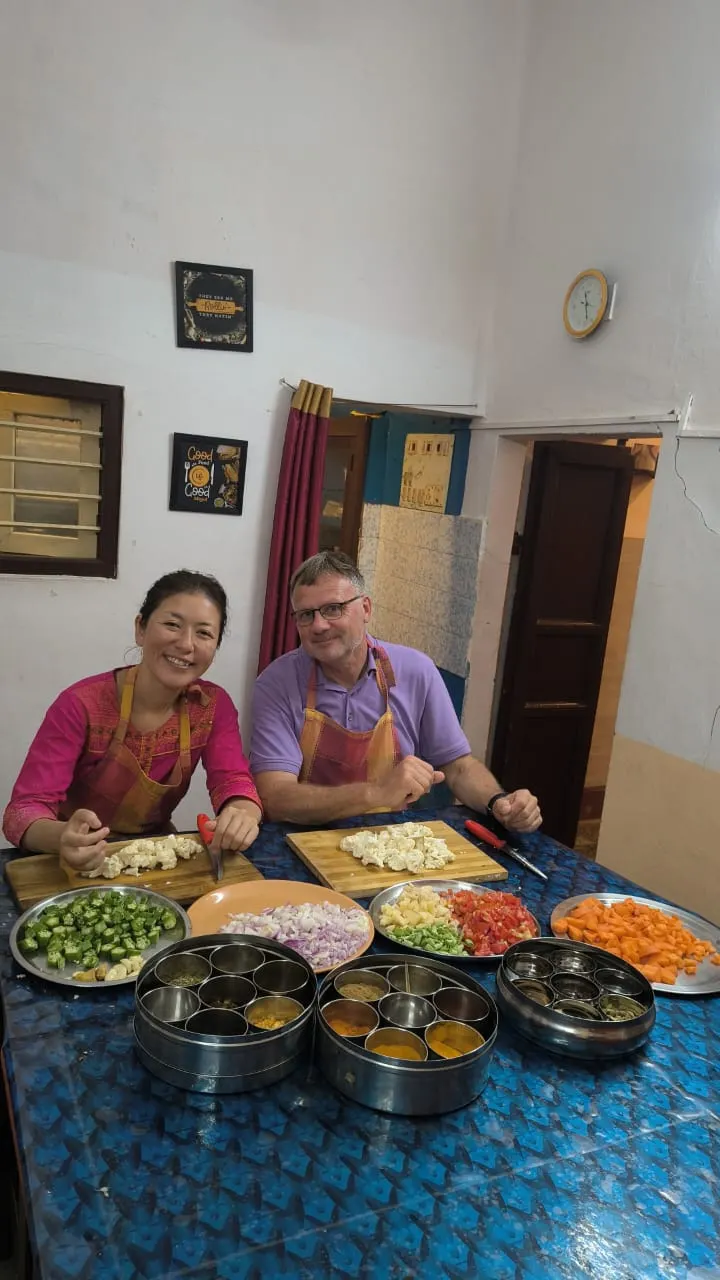
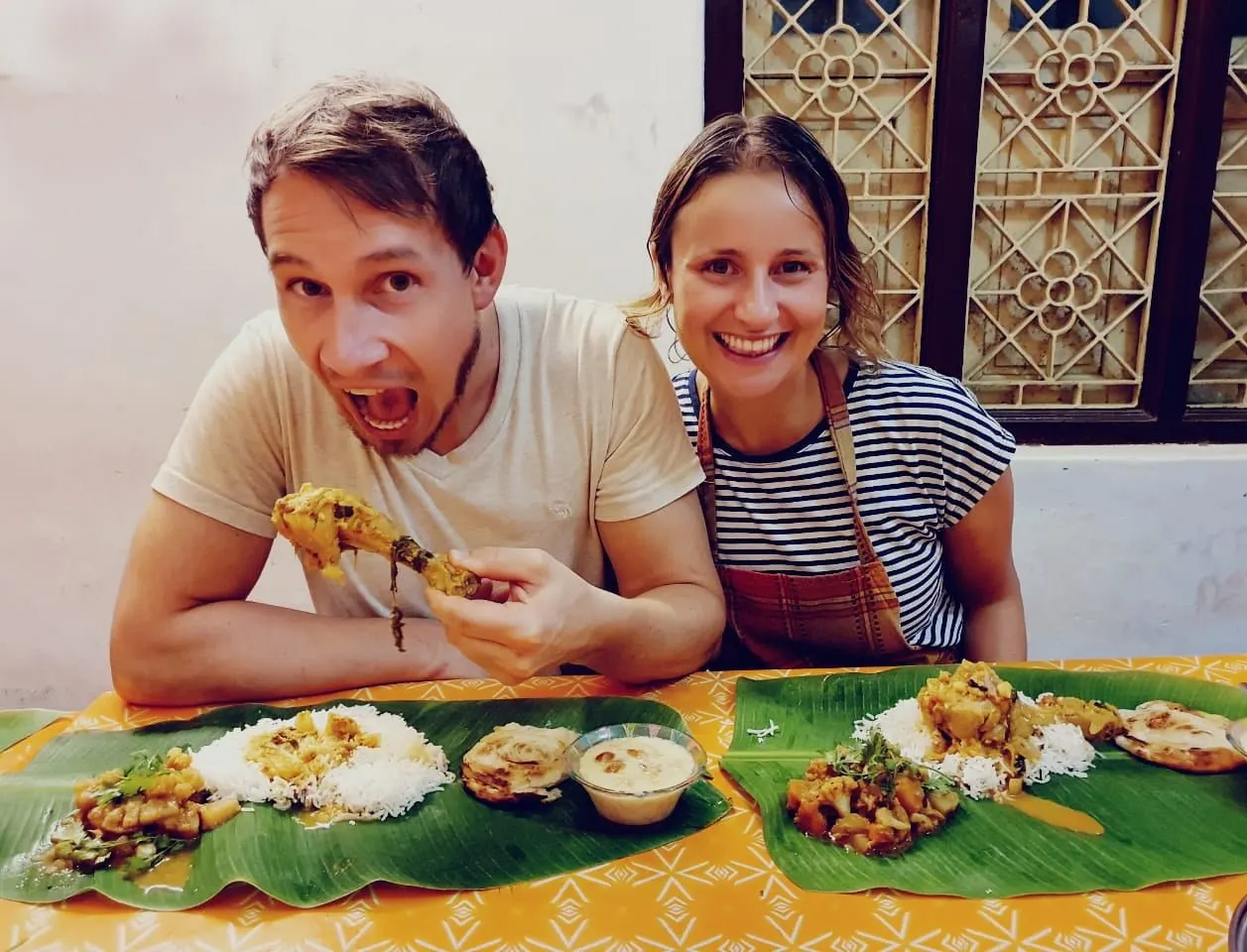
And the best part comes last. When everything is ready, you sit down and enjoy the meal you cooked with the other guests, in the garden and courtyard of Sita. It is not about cooking perfectly. It is about discovering something new, enjoying the process and sharing a good meal.
Take a little taste of India home
You do not need a professional kitchen or dozens of expensive ingredients to cook many Indian dishes. With a few essential spices, fresh vegetables and some basic techniques, you can bring the flavours home. Once you know how to use cumin, turmeric, coriander, mustard seeds, ginger and garlic, you start to see Indian cooking differently, and you can experiment with vegetables, lentils and your own spice mix.
That is why we send you an e-booklet after the class: the recipes to cook again at home, long after your holiday.
Practical details
- When: Monday to Saturday, 10 am to 1 pm (with lunch) or 4 pm to 7 pm (with an early dinner).
- Price: from ₹1,500 per person. The ingredients, the market visit by autorickshaw and the e-booklet are included.
- Who: one person or a small group of 2 to 10 guests. Children above 6 years are welcome.
- Language: English. The morning class can also be taught in French.
- Where: Sita Cultural Center, 22 Candappa Moudaliar Street, Pondicherry.
- Please tell us when you book if you prefer vegetarian, vegan or non-vegetarian dishes, and about any food allergies.
If you would like to cook more than one cuisine, take a look at our French cooking class, Creole cooking class or Indian snacks class.
Join us for an Indian cooking class in Pondicherry
Food is one of the most enjoyable ways to discover a country. Whether you are a passionate home cook, a vegetarian food lover or a curious traveller who simply likes trying new things, you are welcome. Come with curiosity, bring your appetite and be ready to get your hands involved.
Discover local ingredients. Learn traditional recipes. Cook, taste and share.
Questions people ask
How long is the Indian cooking class in Pondicherry?
The class takes about three hours, Monday to Saturday. The morning class runs from 10 am to 1 pm and ends with your own lunch. The afternoon class runs from 4 pm to 7 pm and ends with an early dinner.
Do I need any cooking experience?
No. Everything is taught step by step, and you do the cooking yourself. Beginners and keen home cooks are equally welcome, and you can ask your teacher anything along the way.
Can I cook vegetarian or vegan dishes?
Yes. You can choose vegetarian, vegan or non-vegetarian dishes, and South or North Indian cooking. Please tell us your choice and any food allergies when you book.
Is the market visit included?
Yes. The class starts with a visit to the local vegetable market with your teacher, by autorickshaw. The ingredients and the transport are included in the price.
Can children join?
Yes, children above 6 years are welcome. A group can have up to 10 adults and 5 children.
Can I join alone, or in a group?
Both. The class can be organised for one person or for a small group of 2 to 10 guests. If you book alone, a small solo supplement may apply; the booking page explains it clearly.
In which language is the class taught?
In English. The morning class can also be taught in French.
Do I get the recipes?
Yes. We send you an e-booklet after the class, so you can cook the dishes again at home.
Ready to go?
Choose your date and book the indian cooking class online in a minute.
See dates and book
